Wind-Resistant Fencings: Just How Melbourne Builders Keep Solid
Melbourne weather has a way of reminding you that “outside” is not optional. A fence might look solid on a calm morning, then a few days later you get a gusty afternoon that tugs at every panel like it wants to test the whole job. I have seen brand-new fences behave beautifully for weeks, then start to loosen, rack, or bow the moment the wind hits them from the side. Not because the builders forgot something obvious, but because wind loading is sneaky. It cares about gaps, alignment, footing depth, fixing details, and the way a fence traps air.
When people ask for wind-resistant fencing, they usually mean one of two things: stronger posts and better bracing, or a design that sheds wind rather than catching it. Real Melbourne builders plan for both. And when you talk to good fence companies Melbourne, the conversation tends to get technical in a practical way, not a marketing way. They talk about post spacing, concrete specification, panel tension, and why certain fence styles act differently under pressure.
Let’s walk through how the work gets done on the ground, what usually goes wrong when it is not, and the decisions builders make to keep fences straight through real gusts.
Why wind breaks fences in the first place
A fence is basically a long, slender structure. That means it behaves like a sail if you let it. Wind speed is only part of the story, because pressure depends on how the wind meets the fence face, whether there is solid cladding, and how turbulent the air becomes around the posts and rails.
There are a few common wind-related failure modes I keep coming back to:
The first is post movement. If posts are not anchored deeply enough, or the concrete mix and placement are sloppy, the post base can shift slightly. That tiny shift becomes a pivot point. The fence does not have to collapse to fail, either. Racking, leaning, or misaligned pickets are often the first warning signs.
The second is rail and bracing weakness. Even if posts hold, the rails can flex or the fixings can pull out. Wind loads prefer paths of least resistance, so if a rail connection is under-designed or the screws are the wrong type, the whole fence can “walk” sideways.
The third is the wind trapping effect. Solid or near-solid panels can pressurise and pull air through edges and gaps. With certain styles, the fence can experience alternating pressure loads as gusts rise and fall. That cycling is rough on weak connections.
And then there is the simplest one, workmanship. If brackets are installed without checking levels and straight lines, the fence might start out slightly out of plumb. Wind then exaggerates the error. You cannot always see it until a gust hits and the fence settles into a new, less attractive shape.
In Melbourne, where coastal influence and storm fronts can bring sudden gusts, you do not get many chances to “wait and see” without paying later. Good builders treat wind resistance as a design and build quality issue, not a hope-and-pray issue.
The Melbourne-builder mindset: design for loads, not for looks
You can have a fence that looks great in photos and still fails under stress. Builders who regularly do fencing jobs around Melbourne tend to think in terms of structural behaviour.
Start with geometry. A fence is more stable when it has consistent post spacing, rigid connections, and a layout that avoids long unsupported spans. Builders also pay attention to fence height and the proportion of open area in the panels. A taller fence can be fine, but only if it is engineered with the wind loading in mind. “It will be okay” is not a strategy when the local weather can turn quickly.
Then comes the foundation. In fences, the foundation is not just about holding up the top. It is about resisting the bending moment created when wind pushes on the fence face. That is why builders talk about post size and depth, and why they often recommend concrete placement details that sound overkill until you see a fence that has moved.
Finally, there are the connections. Wind does not just try to knock the fence down; it tries to move it in small increments. Those increments accumulate. The screws, bolts, brackets, and post caps all matter because they form the transfer path for load from the panels into the posts and out into the ground.
This is also where trade experience shows. Builders often know, from the way certain sites behave, what type of fixings tend to perform well in that environment. Soil moisture, tree roots, and even where the fence sits relative to the prevailing wind direction can change the story.
Posts: the anchor point that decides everything
If you want a wind-resistant fence, start with the posts. Not in a vague way. In a specific way.
I have watched fencers focus on the “nice” bits first, like the style of pickets or the colour of the capping, and leave post specification to the last minute. That approach costs time later. Once you realise the fence needs heavier posts or tighter spacing, it can become a mess. You end up modifying the rails, reworking alignment, and sometimes replacing materials that were already delivered.
In practical terms, builders consider:
- Post diameter and material, because stiffness and corrosion resistance both affect performance over time.
- Post spacing, because wider spacing increases span length, which increases the bending load on each post and rail connection.
- Depth and concrete embedment, because the ground provides resistance in different ways depending on soil conditions and depth.
- Alignment during installation, because straight posts make bracing work as intended.
One thing that surprises some homeowners is that wind-resistant fences are often more about consistent, boring detail than dramatic upgrades. A few extra brackets, correctly positioned, and posts installed plumb and true can beat a “bigger timber” solution done without proper spacing and concrete.
Concrete matters too. For wind resistance, builders do not just pour and leave. They try to get good coverage around the post. Poor consolidation can create a weak zone that cracks or lifts. In clay or mixed soils, the embedment can behave differently, so builders tend to be careful about how they prepare the hole and how they place the concrete so there are no voids around the post.
Rails and bracing: stopping the racking
Wind often pushes sideways, not straight down. That means a fence needs resistance to racking, which is the side-to-side deformation that turns an aligned fence into a leaning one.
Rails help, but rails only work if the system transfers load properly. If rails are attached loosely, or if the connections are spaced too far apart, rails flex instead of holding the fence in place. Over time, fixings can loosen due to vibration from gust cycles. This is why experienced builders take care with the number of fasteners per connection and the type of fastener matched to the material.
Bracing is where builders “lock” the fence. Bracing can be diagonal, stepped by section, or built into the framework through structural members. The goal is to form a stable plane so wind pressure does not simply turn each panel into a flexible curtain.
There are also site-based decisions. A fence near a corner, where wind can funnel between buildings or trees, might need extra bracing even if the rest of the run looks fine. Builders notice these patterns because they are out there measuring, not just imagining wind.
Fence style choices: open, semi-open, and solid
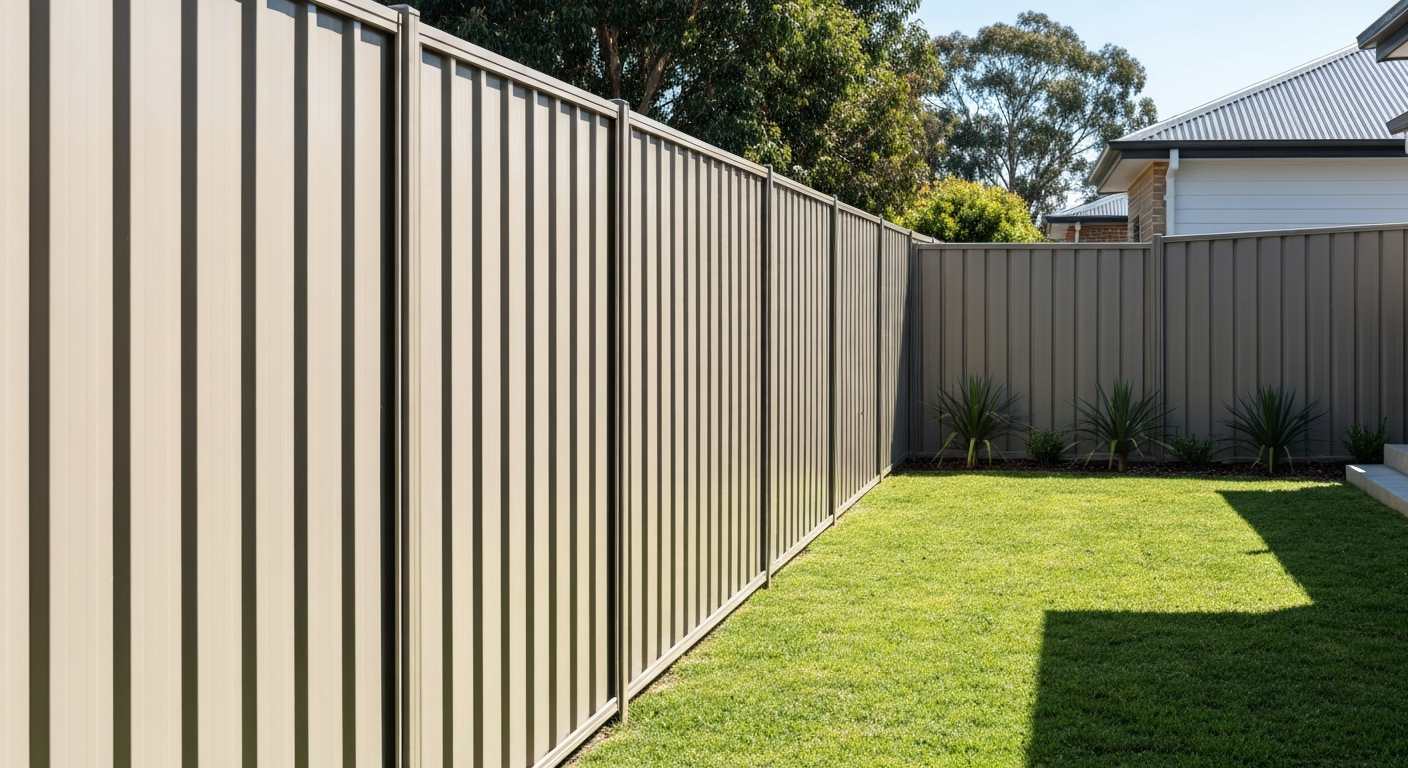
The style of fence makes a huge difference to wind behaviour. A fully solid fence face blocks airflow and can experience high pressure on the outer surface. An open fence lets some air through and reduces pressure. Semi-open designs fall in between.
That is why you can see two fences of the same height that feel very different during gusts. The one with more open area usually puts less load into the posts and rails. The solid one can still be built to resist wind, but it typically needs more robust framing and stronger connections to handle the higher pressure.
As a builder, I treat this like a trade-off conversation. If you want maximum privacy with a solid look, you pay in the structure. If you want lighter visual impact and wind relief, you still need correct post spacing and fixings, but the load is generally lower.
One subtle point: the “effective openness” is not just about the apparent design. The gap between pickets, the thickness of slats, and the thickness of the frame all influence how wind flows around the fence. Even small details like panel bowing can increase pressure by changing airflow paths, so straight installation is not cosmetic.
Fixings and materials: what lasts through salt air and rain
Wind resistance is partly structural, partly durability. Melbourne has plenty of rain, and in some areas you get coastal salt exposure. That means fixings and materials have to be appropriate for the environment. If you use unsuitable hardware, you may not see failure immediately. Instead, you get gradual corrosion and loosening.
Builders often specify corrosion-resistant fixings, use proper washers where needed, and pay attention to how the timber or metal components are joined. Stainless steel, galvanised components, and compatible coatings can matter because dissimilar materials can react. When you get chemistry wrong, wind and vibration finish the job.
Another practical detail is panel tension and alignment. If a panel is slightly twisted when installed, it may appear acceptable until a gust hits and the twist becomes strain at a connection point. Fixings then bear extra load, and you see the first loosening at the same joints again and again.
Good fence companies Melbourne typically talk you through the hardware choices in plain language, because homeowners want to understand what they are paying for. A “proper fixings” conversation is rarely glamorous, but it is where performance comes from.
Concrete, soil, and drainage: the unglamorous strength
Post embedment is a big topic, but the reality is that soil conditions change from site to site. Melbourne has everything from sandy patches to heavier soils. Soil moisture influences how posts sit and how the concrete cures and bonds.
Builders who do wind-resistant work carefully prepare the base:
They check whether the ground is stable and whether there are signs of water pooling. If water sits around post holes, it can undermine foundations over time, and freeze-thaw cycles are not the main Melbourne issue, but swelling and movement from wetting and drying still happens. Drainage is not always visible from the front yard, so builders look for hints like damp edges, recent subsidence, or soft spots.
When the ground is tricky, builders might use deeper embedment, larger post sections, or additional bracing, depending on the design and the fence type. The important thing is that the decision is based on the actual site, not on a standard template.
Concrete placement is also about workmanship. Good builders do not just pour and hope. They ensure the concrete surrounds the post properly, and they avoid leaving voids that can become a weak seam. If the post is moving during pour, it can lock in a slightly off alignment that later gets amplified by wind loads.
Height, gaps, and the “wind shadow” effect
Wind is not consistent. It changes with elevation, nearby buildings, and landscaping. The wind shadow behind a wall or fence can lower pressure on one section and increase it on another.
That means a fence run that seems uniform to an observer may not have uniform wind loads to a builder. A section near an external corner, near a driveway opening, or at the edge of a property can face different pressure than the middle section.
Height also changes the load distribution. Taller fences see wind pressure higher up and more forceful gust impacts. A fence that is stable at lower heights might start to behave differently if you increase the height by a few panels, especially with solid infill. Wind-resistant builds often account for that by matching post depth, spacing, and bracing intensity to the actual height.
Even gaps can matter. Some homeowners like decorative gaps or use slat spacing for airflow. If gaps are too large in certain patterns, wind can create vibration and “flutter” in components, which then loosens fasteners. The answer is not always “make gaps smaller.” Sometimes it is to increase structural stiffness so the fence does not resonate under gusts.
A quick reality check on bracing locations
Bracing is not just about having it somewhere. Placement matters. If you brace at the wrong intervals or miss the areas that experience higher sideways forces, the fence can still rack.
On one job I recall, the overall run looked strong and the posts were fine, but a mid-run section near a hedge line was exposed more than the rest. Wind came off the street corridor, hit that section first, and after a storm week the fence panels began to twist slightly. The fix was not to replace the whole fence. It was to adjust bracing frequency and tighten certain connections. The wind had basically found the weakest “frame rhythm” in the build.
This is the kind of issue builders spot during installation. They are watching plumb lines, checking the straightness of rails, and thinking about which joints will see the highest stress.
What homeowners should ask before signing with fence companies Melbourne
Homeowners do not need engineering degrees to make good choices. You do need good questions, because fence performance comes down to details that might not appear in a sales brochure.
Here are the questions that, in my experience, separate solid builds from rushed ones:
- How are post spacing, post size, and post embedment determined for wind conditions on my site?
- What concrete mix and placement method will be used around each post?
- What bracing system is included, and how is bracing spaced along the fence run?
- What fixings and coatings are used to resist corrosion over the life of the fence?
- Will the builder check alignment and straightness during installation, not just at the end?
If a builder can answer those clearly, you usually get a better job. If the conversation stays vague or focuses only on style and colour, you might be paying for looks while leaving structure under-specified.
Common mistakes that show up after the first windy stretch
A fence can fail in ways that are predictable if you know what to look for.
One common mistake is over-wide post spacing. It makes a fence cheaper and faster to install, but wind loading does not care about budgets. After gusty weather, you see gradual leaning. Rails might start to loosen because they are taking up slack from posts that are doing too much work.

Another is ignoring bracing intervals. Builders may add bracing at the ends of the fence, which helps, but wind still acts on the unsupported middle spans. If bracing is too sparse, the fence can rack subtly. Homeowners then blame “bad wind,” but the structure did not have enough lateral stiffness to hold shape.
Poor alignment is also a quiet killer. A slight twist at installation can become a strain point. Wind loads cycling through gusts then work the twist until fixings loosen or rails shift.
Finally, there is the hardware mismatch. If fixings are not suitable for moisture or if timber is not treated properly for the environment, corrosion and decay reduce capacity. It might take months, sometimes longer, but it eventually shows.
The tricky part is that none of these mistakes look catastrophic at first. You just get small issues that grow. By the time the fence is visibly leaning, the “small” problem has been working for a while.
Bringing it all together: building a fence that stays straight
Wind-resistant fences in Melbourne are not one magic material. They are a system. Posts, concrete, rails, bracing, fixings, alignment, and site assessment all https://nyc3.digitaloceanspaces.com/buildblog/uncategorized/fencing-staining-and-securing-in-melbourne-what-to-anticipate.html interact.
On the jobs that hold up best, the build feels deliberate. The posts go in plumb. The spacing looks consistent when you measure visually along the line. Bracing appears in the sections that experience higher wind pressure. Panels do not look twisted. Hardware is solid and compatible with the materials.
And importantly, the builder does not treat the fence as a standalone object. They consider how the fence sits alongside gates, boundaries, and changes in terrain. A gate is often the weak point, because it is a moving structure with different load paths. If a fence is strong but the gate posts or hinges are underbuilt, wind can still create problems through gate movement, which then shifts alignment across the run.
If you have a gate, it deserves the same wind resistance thinking as the rest of the fence.
Two simple site observations that help predict wind performance
You can learn a lot about wind risk by watching how air moves on your own block, even if you are not an expert.
First, notice where the wind seems to funnel. Driveways, narrow side access, and gaps between buildings can accelerate gusts. A fence line that sits “in the channel” often needs more robust detailing than a fence that is surrounded by open space or more sheltered landscaping.
Second, pay attention to the existing vegetation and nearby structures. Tall hedges can reduce wind speed at certain heights, but they can also deflect gusts and create turbulent turbulence near the fence face. A fence near a tree line can experience variable loading because branches and leaves disrupt airflow in unpredictable ways.
These observations help you and your builder decide whether the whole fence needs extra bracing or only certain sections.
What a good Melbourne builder does during installation day
The difference between a fence that stays strong and one that slowly gives up often comes down to what happens during the install, not after it.
Good builders keep checking the boring stuff. They confirm post locations before concrete sets. They keep rails aligned so joints do not have to “bend into place.” They use proper fixings and make sure they are installed straight and fully seated.
They also manage the sequence. If you install panels before the entire post line is correctly set, you can end up forcing alignment. That forcing action is how you create preloaded strain, which later shows up under wind.
If you want a practical visual, watch for consistent measuring and straight lines, not just speed. A wind-resistant fence is rarely the fastest fence to install, because the builder is taking time to get it right.
A concise wind-resistance checklist for fence owners
If you are planning a new fence or evaluating an upgrade, this small checklist can help you keep the conversation focused on the right engineering essentials.
- Ask about post embedment depth and post spacing, and whether it is adjusted for your site exposure.
- Confirm bracing type and the interval between bracing points along the run.
- Check what fixings and coatings are used for your specific materials and local conditions.
- Ensure the builder will install posts plumb and keep rails straight during build, not just at handover.
- Clarify how gates are engineered, because wind often finds weaknesses at openings.
This is not about being difficult. It is about making sure the structure is designed to handle the loads it will actually experience.
Repair and reinforcement: when you do not need a full replacement
Sometimes homeowners worry that wind damage means a full fence replacement. Often it does not. If the posts are still mostly stable and the issue is racking from weakened bracing or loosened connections, reinforcement can be enough.
Builders usually start by checking where movement is actually occurring. If the fence is leaning at certain intervals, that points to foundation or post issues at those points. If the leaning is uniform, the problem could be rail stiffness or bracing frequency.
Fixing wind damage is also about matching the original structure. You cannot simply add random extra screws and expect performance. Builders tend to reinforce in a way that re-establishes the load path, often by adding bracing, improving post connections, and tightening or replacing compromised hardware.
If the concrete around posts has degraded or the post bases are moving, you might need more substantial intervention, possibly post replacement at key points. The decision is based on how far movement has progressed and whether the fence can still be returned to correct alignment without forcing it.
The real test is the next gust
A wind-resistant fence is not measured on a calm day. The real proof is after the next storm system rolls through, the gusts catch the fence face, and the structure absorbs the load without shifting into a new shape.
In Melbourne, you can plan around weather patterns, but you cannot control them. That is why builders rely on construction choices that hold up under cycling pressures, not just static loads.
If you take anything away from this, let it be this: wind resistance comes from a system. The posts, the concrete, the rails, the bracing, the fixings, and the alignment during installation all work together. When fence companies Melbourne deliver that system consistently, the fence stops being a background feature and becomes something you can forget about, even when the sky turns and the gusts arrive.
If you want, tell me your fence type (timber, Colorbond, aluminium, paling, slat style, or panel), approximate height, and whether the line is exposed or sheltered. I can outline what wind-resistant details typically matter most for that specific setup.